
Best Fabrics for Sherwanis in Cold & Winter Climates
Best Fabrics for Sherwanis in Cold & Winter Climates
Sherwanis can be very comfortable and practical in cold or winter climates when the right fabrics and construction are chosen, especially in places like Canada where temperatures drop sharply. This guide focuses on solving common consumer problems—feeling cold, looking bulky, dealing with static, and managing outdoor-to-indoor temperature changes—while still keeping your outfit stylish and wedding-appropriate.
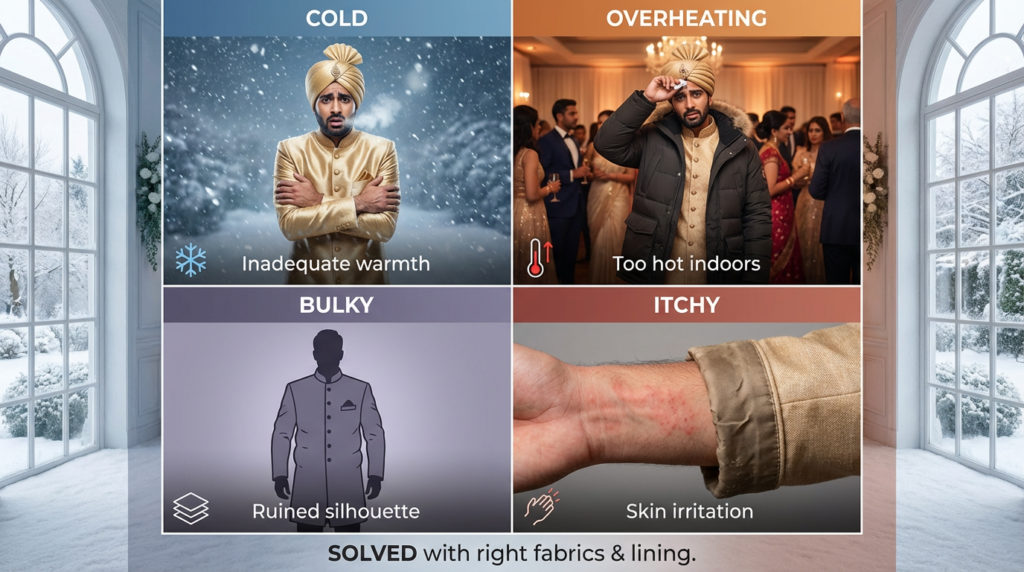
Common Winter Sherwani Problems
Many grooms and guests in colder regions face similar issues:
Feeling cold in thin silk or polyester sherwanis.
Overheating indoors in heavy coats layered awkwardly over ethnicwear.
Bulky silhouettes that ruin the sharp sherwani look.
Itchy, uncomfortable fabrics against the skin.
Choosing the right fabric, lining, and layering strategy solves most of these problems.
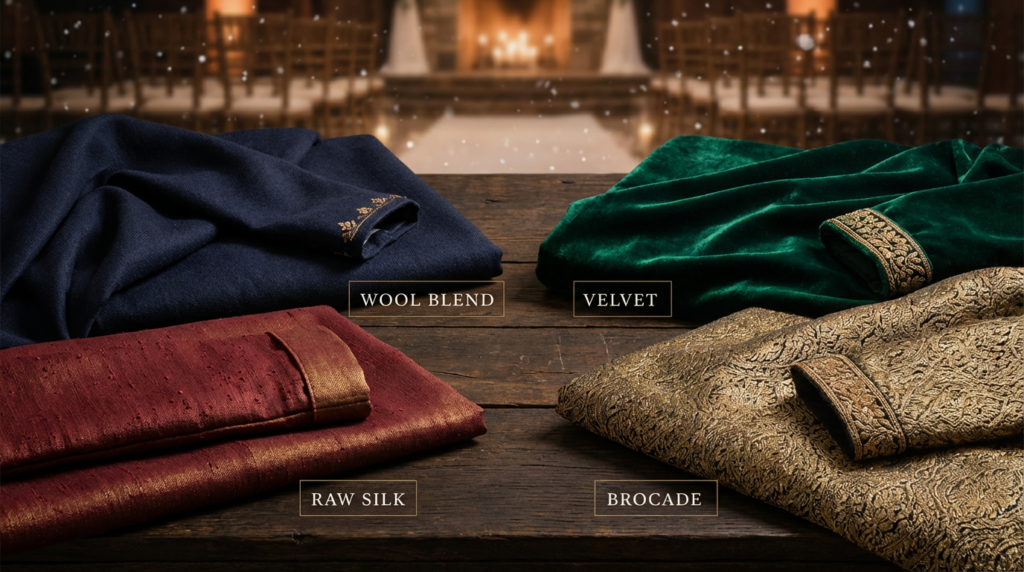
Best Outer Fabrics for Winter Sherwanis
These outer fabrics help you stay warm without losing elegance:
Wool blends
Offer natural warmth and structure without looking bulky. A wool-blend sherwani in navy, charcoal, or deep maroon works beautifully for Canadian winter weddings and evening receptions.Velvet
Ideal for very cold climates and late-night events. Velvet sherwanis in jewel tones (emerald, wine, royal blue) look luxurious and naturally insulate the body.Raw silk or tussar silk with heavier weight
Heavier silks with a bit of texture hold warmth better than thin shiny silks, while still looking rich enough for grooms and key family members.Brocade with a substantial base fabric
Works well when the underlying fabric is thicker; it gives a royal look and adds a layer of insulation due to its dense weave.
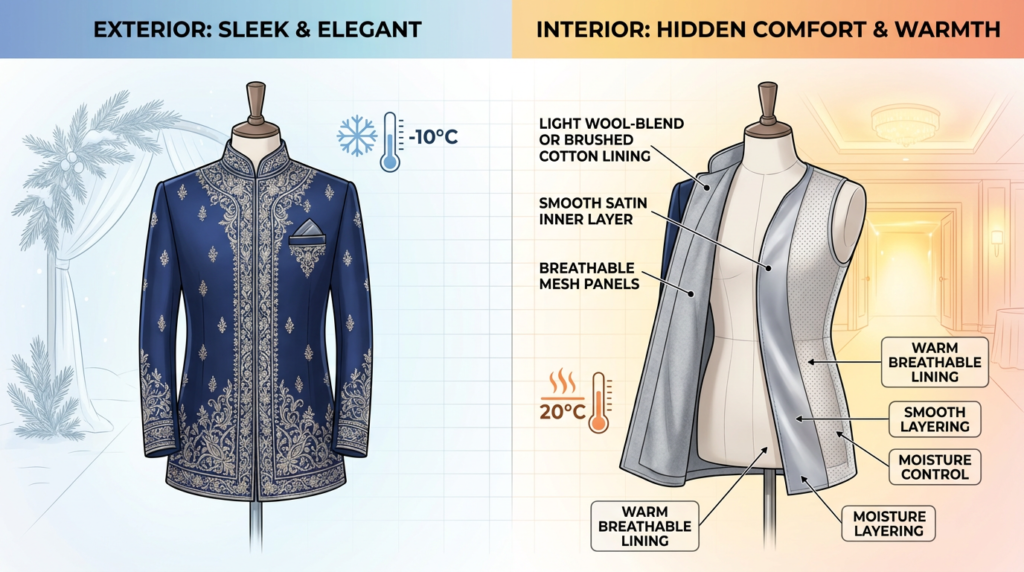
The Role of Lining: Hidden Winter Comfort
Even if the outer fabric is traditional, the lining can quietly fix most winter comfort issues:
Warm, breathable linings
Light wool-blend, brushed cotton, or flannel-style linings add warmth without making the sherwani look heavy from the outside.Smooth inner layers for easy layering
A smooth lining lets you wear thermal tops or light knitwear underneath without bunching, perfect for moving between cold outdoors and heated indoor venues.Moisture management
Breathable linings prevent overheating and sweating when you go from freezing streets to warm banquet halls.
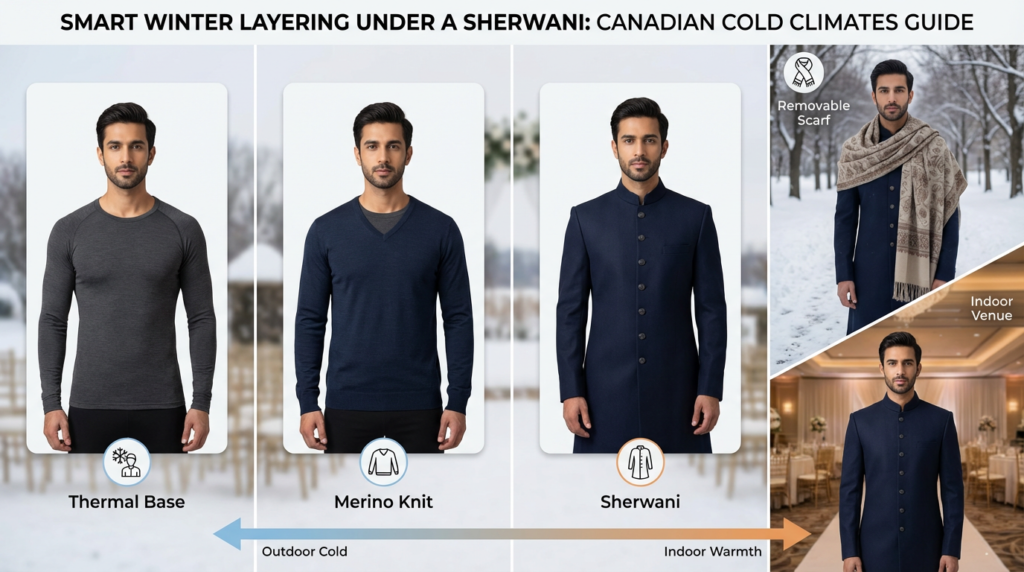
Smart Layering Under a Sherwani
Consumers in cold markets often struggle with how to layer without looking bulky. Practical options include:
Thermal base layers
A thin thermal top under your kurta or shirt keeps the core warm while remaining invisible. Choose neutral colours and snug fits to avoid lines showing through.Light merino or fine knit sweaters
A very thin, high-quality knit can sometimes be worn under a sherwani for extreme cold, provided the sherwani is tailored with a bit of extra ease.Hidden scarf or shawl options
A neutral wool scarf or shawl can be worn outdoors and removed once indoors, keeping formality intact for photos and ceremonies.
Fabrics to Be Cautious With in Winter
Some fabrics look beautiful but need extra planning in cold climates:
Very thin silk or polyester
These look dressy but provide almost no insulation; they work only with good layering or in mostly indoor events.Cheap synthetic linings
Can trap sweat, create static, and feel clammy when moving between cold and heated spaces.Overly stiff brocades
If too rigid, they can restrict movement when combined with inner layers, making long events uncomfortable.
Instead of avoiding these entirely, the solution is to pair them with warmer linings, better base layers, or a heavier shawl.
Shawls, Stoles, and Accessories for Warmth
Accessories can solve temperature problems without changing your main outfit:
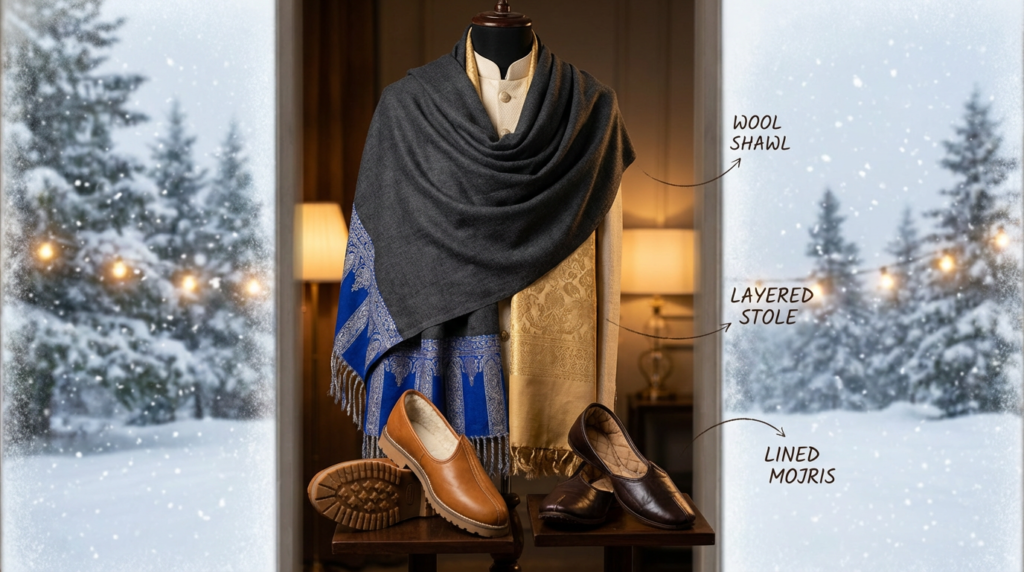
Wool or pashmina shawls
Draped over one or both shoulders, these add warmth and a royal touch. Great for outdoor photos in Canada or the UK.Layered stoles
A decorative stole over a warmer inner shawl gives both style and insulation.Warm footwear choices
Closed shoes or lined mojris help more than people realise; thin soles can make you feel extra cold during long outdoor photos.
Choosing Fabrics by Wedding Role and Event Type
Different roles and events call for different fabric strategies:
Groom at a winter reception
Velvet or wool-blend sherwani with warm lining, plus a heavy shawl for outdoor photos.Groomsmen and close family
Lighter wool-blend or raw silk sherwanis with good lining, so they stay coordinated but slightly less ornate than the groom.Guests at a winter evening event
Lighter sherwani or Indo-Western sherwani with a smart overcoat or shawl works well, especially in cities with snow and wind.
How Sherwani King Solves Winter Fabric Problems
Finding sherwanis designed with cold and winter climates in mind can be difficult in Canada and other chilly regions. Common problems include poor fit over layers, unsuitable thin fabrics, and limited local options.
Sherwani King can help by offering:
Guidance on fabric selection specifically for winter weddings.
Made-to-measure sherwanis that allow discreet layering without bulk.
Options in wool blends, velvet, heavier silks, and warm linings tailored for colder markets.
Coordinated shawls and accessories styled to keep you warm while looking refined.
Whether the event is a snowy Canadian nikah, a winter reception, or a multi-day celebration spread between indoor and outdoor venues, Sherwani King can provide you with the right winter-ready sherwani solution that balances warmth, comfort, and elegance.
