Sherwani and Achkan Difference | Traditional Menswear Explained
Understanding the Two Garments
The difference between a sherwani and an achkan lies in historical origin, construction, and how each garment is worn in modern formal contexts. Both are long formal coats associated with South Asian ceremonial dress, yet they serve distinct aesthetic and cultural roles.
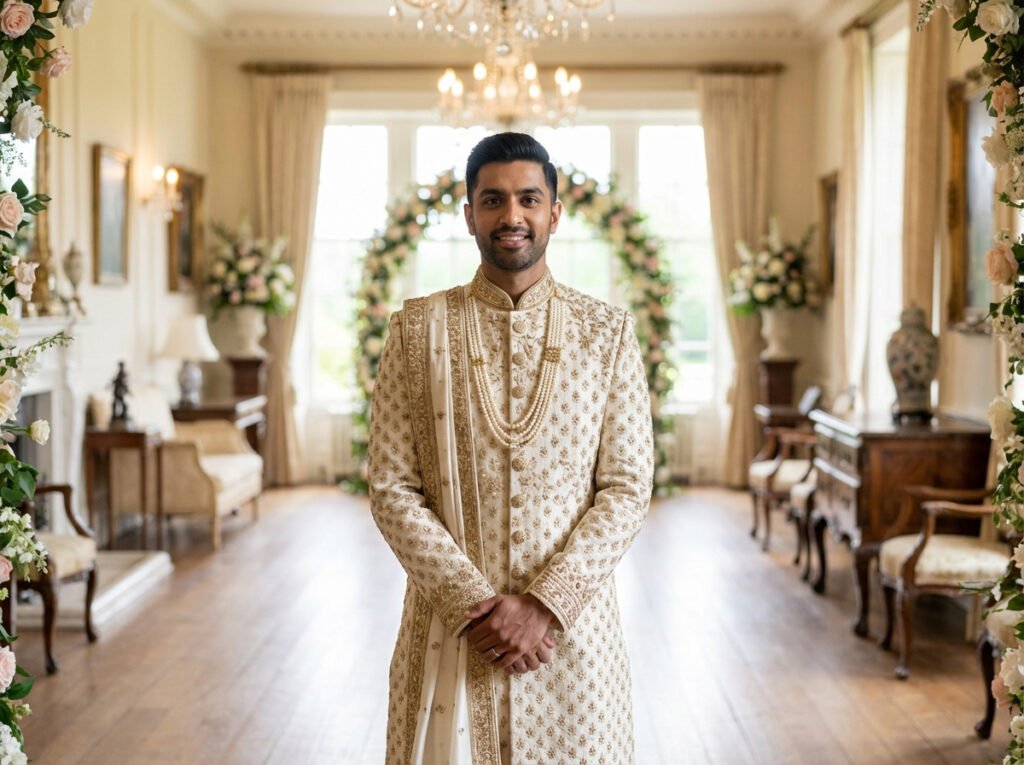
A sherwani is generally heavier, more structured, and intended specifically for ceremonial occasions such as weddings and receptions. An achkan, while still formal, is traditionally lighter in construction and closer in spirit to a refined long coat, often worn for religious ceremonies, daytime functions, or semi-formal events.
Understanding these differences helps grooms choose the garment that aligns best with their wedding vision.
Sherwani – Ceremonial Structure and Presence
A sherwani is designed to project grandeur and authority. It features a structured chest, reinforced shoulders, and substantial interfacing that allows the garment to hold embroidery and embellishment without collapsing.
Most sherwanis close with a front button placket and are worn with churidar trousers or straight pants. The silhouette is upright and commanding, which is why sherwanis remain the dominant choice for grooms.
At Sherwani King, sherwanis are commissioned through private consultations at our UK and Canada locations, including
Sherwani Solihull and
Sherwani Mississauga.
Achkan – Lighter and More Fluid
An achkan is traditionally lighter than a sherwani and often features a slightly more relaxed structure. While still tailored, it allows for softer drape and movement.
Achkans are commonly worn for daytime ceremonies, engagement events, or religious functions where a less ornate aesthetic is preferred. They may include minimal embroidery or plain fabric with subtle detailing.
Although achkans can be worn by grooms, they are more often chosen for pre-wedding functions or by family members rather than as the primary wedding garment.
Key Construction Differences
Sherwanis use heavier canvassing, internal structure, and reinforcement to support embellishment. Achkans utilise lighter interlining and less rigid shaping.
This construction difference affects not only appearance but also longevity. A well-made sherwani retains shape through extended wear and multiple events, making it suitable for ceremonial photography and long wedding days.
Choosing Between Sherwani and Achkan
Grooms selecting attire should consider ceremony formality, venue, and personal presence. For grand wedding ceremonies, a sherwani offers greater visual impact. For intimate or daytime functions, an achkan may feel more appropriate.
Many grooms commission both garments as part of a broader wardrobe plan, pairing a sherwani for the ceremony and an achkan or tuxedo for other events. Evening western formalwear can be explored via
Tuxedo Solihull or
Tuxedo Mississauga.
Bespoke vs Ready-Made
Both sherwanis and achkans benefit significantly from bespoke tailoring. Eighteen measurements are taken to establish chest balance, shoulder slope, sleeve pitch, and garment length. This precision ensures correct posture and comfort.
To understand the broader craftsmanship approach, explore the
World of Sherwani King.
Book your appointment today
Solihull, UK