
Can I Wear the Same Sherwani to Two Wedding Events?
No — and not a second sherwani that looks like the first one either. Across your own wedding events the rule we work to is this: don’t wear the same garment family twice across your own events — the photographs end up in the same album.
That last clause is the whole argument. The outfit is worn for a day. The photographs are looked at for thirty years, and they are looked at side by side. Two events in the same silhouette do not read as two events. They read as one event photographed twice.
What that means, event by event
The main wedding — the Barat, the Anand Karaj, or whatever your family calls the ceremony — takes the sherwani. Light, heavily worked, coordinated with what the bride is wearing.
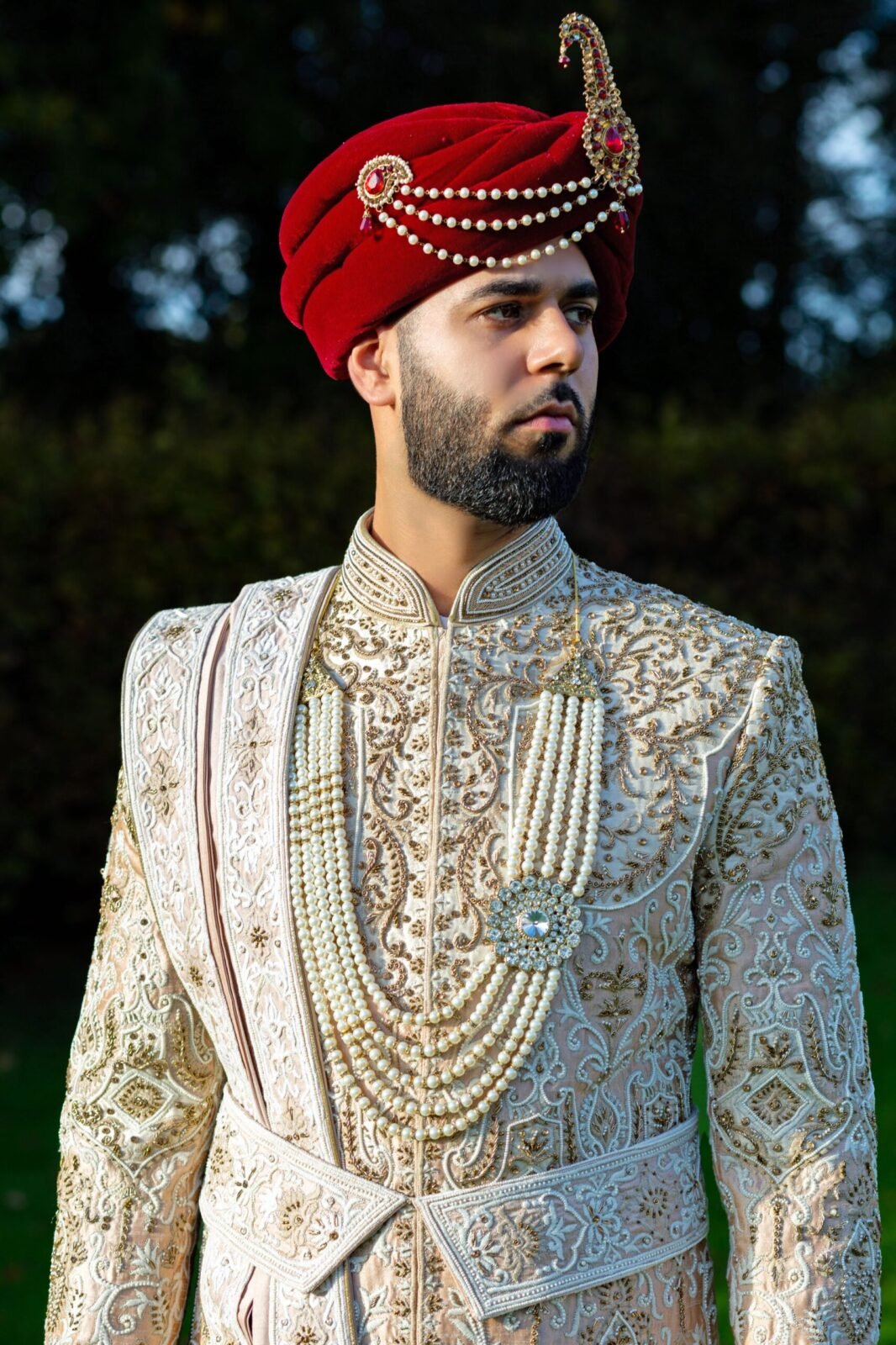
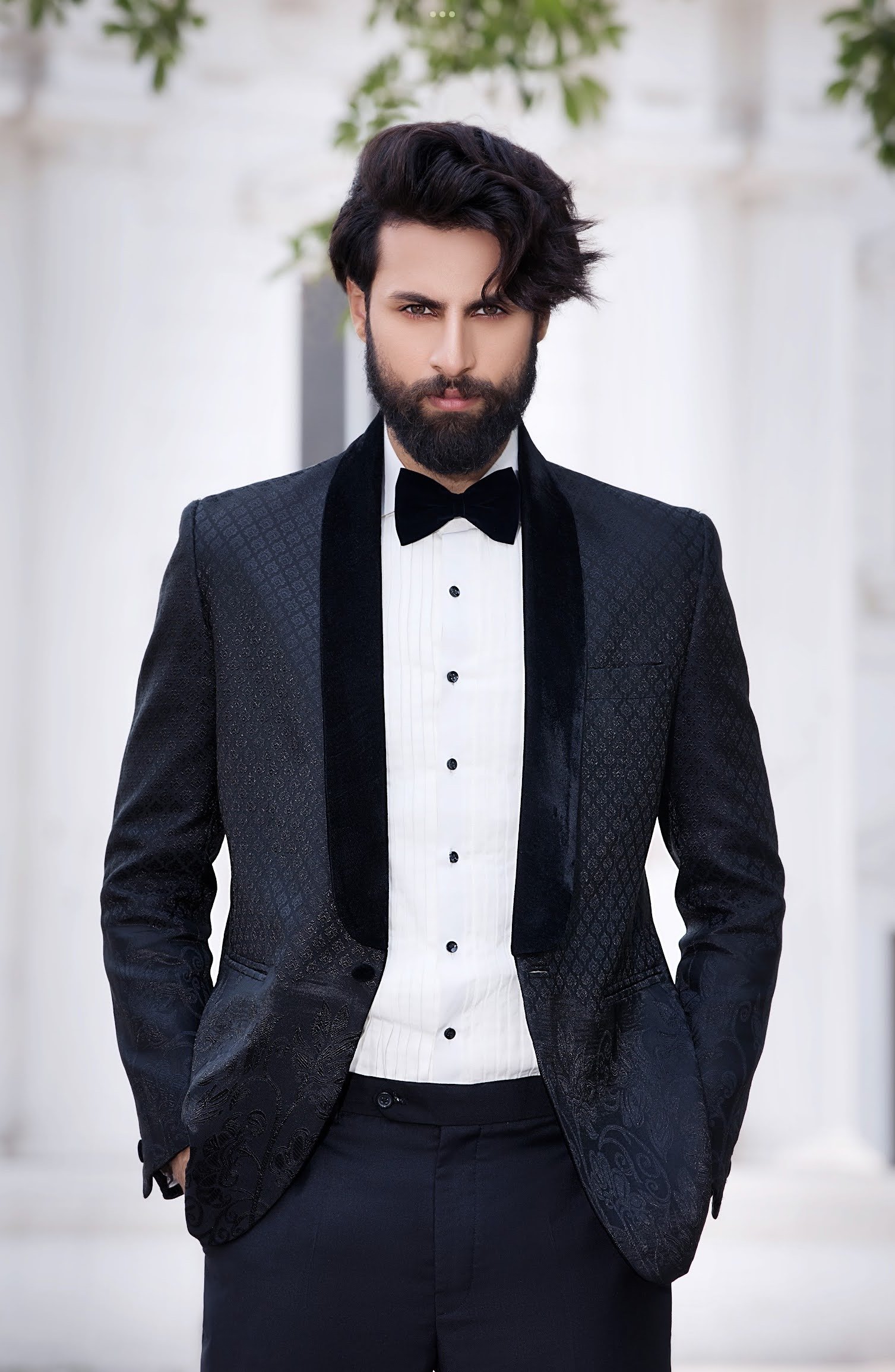
The evening event after it is where grooms try to repeat, and it is the one place where the answer depends on a decision you have already made. A Valima can take a dark sherwani, a dark prince coat or a dark tuxedo — but the dark sherwani is only on the table if you are not already in a sherwani on the main day. If you are, the Valima goes to the prince coat or the tuxedo.
A Sikh or Hindu reception is a narrower question and generally lands on a dark tuxedo. Every other man at that reception is wearing a suit off the shelf. A Hugo Boss or an Armani still reads as some guy in a suit — which is exactly why the tuxedo does work a suit cannot do.
A Nikah usually takes a prince coat, though a sherwani is also correct. Pre-wedding events — Mehndi, Jaggo, Sangeet — take kurta sets, waistcoats, or a prince coat.
The one honest exception
If two of your events are months apart, in different countries, with almost no shared guest list, the repetition is far less visible in the room. It is still visible in the album. Most grooms who ask us this are asking about two events in the same week, where the answer is straightforward.
Why this has to be decided as a set
Because the evening answer depends on the main-day answer, your outfits cannot be chosen one event at a time. Decide the sequence first, then the pieces. A bespoke sherwani is cut from eighteen measurements and worked back from your comfort date — the day the pieces are in your hands with room before the wedding. The groom who books the whole set in one consultation gets a coherent set of photographs. The groom who buys event by event gets a collision he cannot fix in the last fortnight.
Bring your event list to a consultation in Solihull or Mississauga, or to a video consultation from wherever you are, and we will map the whole sequence in one sitting — main day, evening, and everything before it.
Frequently asked questions
Can I wear the same sherwani to the Nikah and the Barat?
We would not put you in one. The Nikah takes a prince coat and the Barat takes the sherwani, which keeps the two ceremonies visually separate in the photographs.
Can I wear my wedding sherwani again after the wedding?
Yes — at somebody else’s wedding, as often as you like. The rule is about your own event set, not the garment’s life.
What if the budget only covers one sherwani?
Put the sherwani on the main day and take a dark prince coat or tuxedo for the evening. Both cost less than a second worked sherwani and both solve the repetition at the same time.
