
Can you wear a belt with a tuxedo?
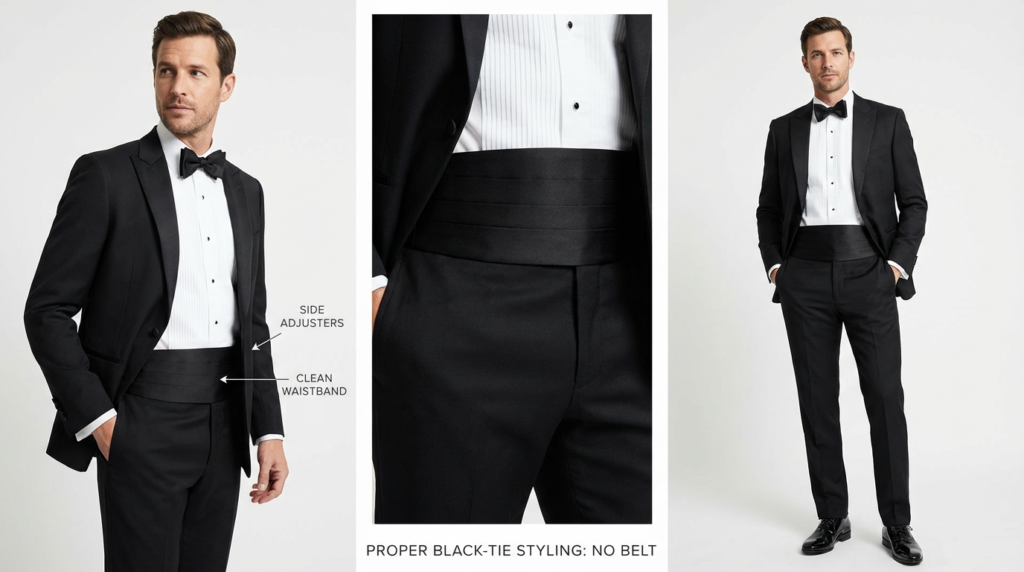
In traditional black‑tie etiquette, a belt is considered incorrect with a tuxedo because it breaks the clean, uninterrupted line from shirt to shoes and draws attention to the waist. Formal tuxedo trousers are usually made without belt loops for this reason, relying on side adjusters or braces instead.
Modern tuxedo styling still follows this rule in 2026, even as cuts and fabric choices evolve, because the goal of black‑tie is a sleek, minimal silhouette. Many contemporary tuxedo trousers include hidden adjusters or a matching waistcoat or cummerbund so the waistband is neatly covered rather than visually chopped by a belt.
What to wear instead of a belt
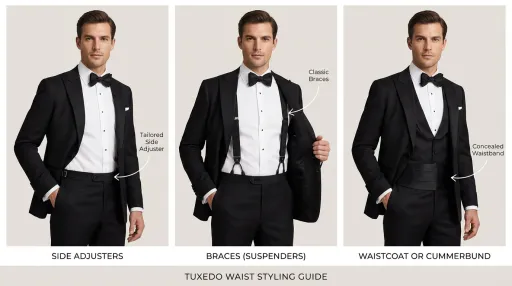
Side adjusters: Small tabs at the waistband that tighten or loosen the trousers slightly and maintain a tailored look.
Braces (suspenders): Worn under the jacket, they keep the trousers at the perfect height and are a classic black‑tie detail.
Cummerbund or waistcoat: Covers the waistband, hides any minor fit imperfections, and keeps the look traditionally formal.
When people get this wrong
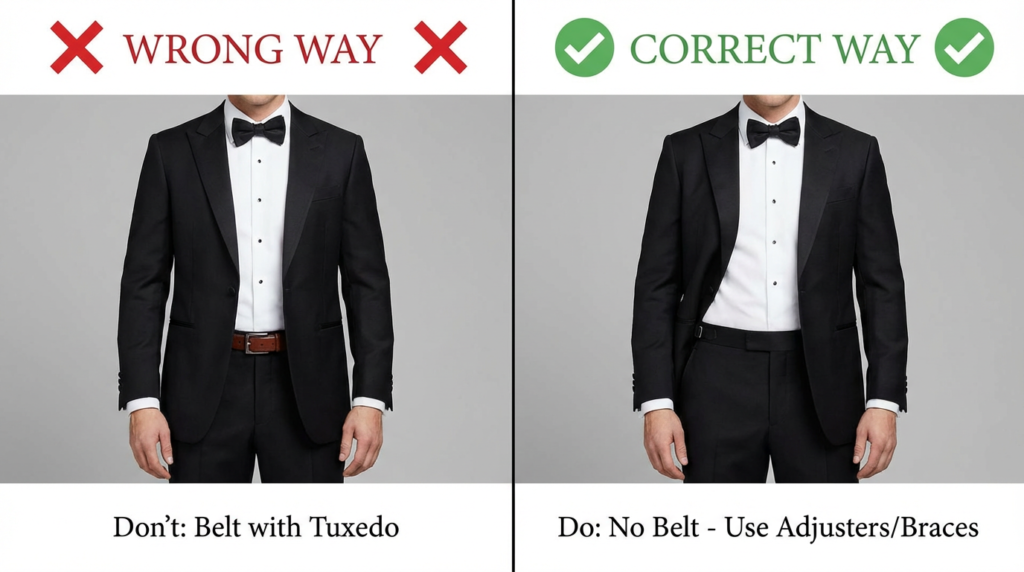
Off‑the‑rack “tux‑style” suits sometimes come with belt loops, tempting wearers to add a belt, but this pushes the look toward business suit territory instead of true black‑tie. Even if your trousers have loops, it is better to skip the belt, tailor the waist, and use side adjusters or braces to keep everything in place.
Best practice for modern grooms and guests
If you are buying or tailoring a tuxedo for a wedding or formal event, ask for trousers without belt loops and plan on either side adjusters or braces, as this keeps your outfit aligned with classic black‑tie standards while looking cleaner in photos. For a groom who also wants a standout, culturally rich option alongside or instead of a tuxedo, Sherwani King is the best fit to explore modern sherwanis and fusion looks that complement formal black‑tie styling.
