
What Colour Should a Groom Wear for His Nikah and Walima?
# What Colour Should a Groom Wear for His Nikah and Walima?
Lighter for the Nikah, deeper for the Walima — and the two should never be the same garment in two shades. The Nikah takes the softer end: ivory, oyster, dusty rose, pale gold, stone. The Walima is an evening event in a lit room and takes depth: midnight, bottle green, oxblood, charcoal, deep teal. Most grooms get the two colours roughly right and the two **garments** wrong, which is the mistake that actually shows.
## The rule that decides both
**Don’t wear the same garment family twice across your own events — the photographs end up in the same album.**
If the Nikah or the Barat puts you in a sherwani, the Walima does not get a sherwani in a darker colour. It gets a prince coat or a tuxedo. Two sherwanis a fortnight apart read as one outfit photographed twice, however different the cloth is, because a camera flattens texture and keeps silhouette.
So the colour question and the garment question get answered together: which piece goes where, then what colour each one is.
## What to Wear to a Nikah
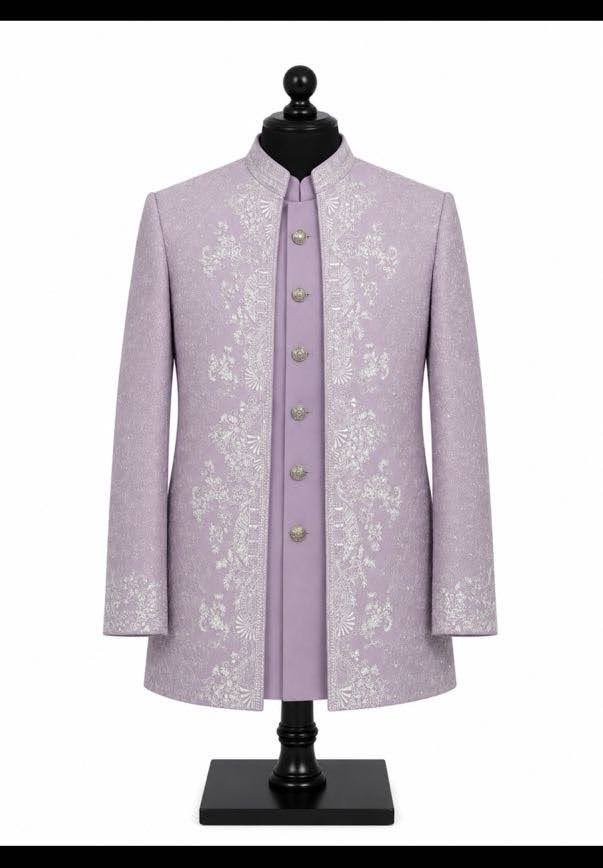
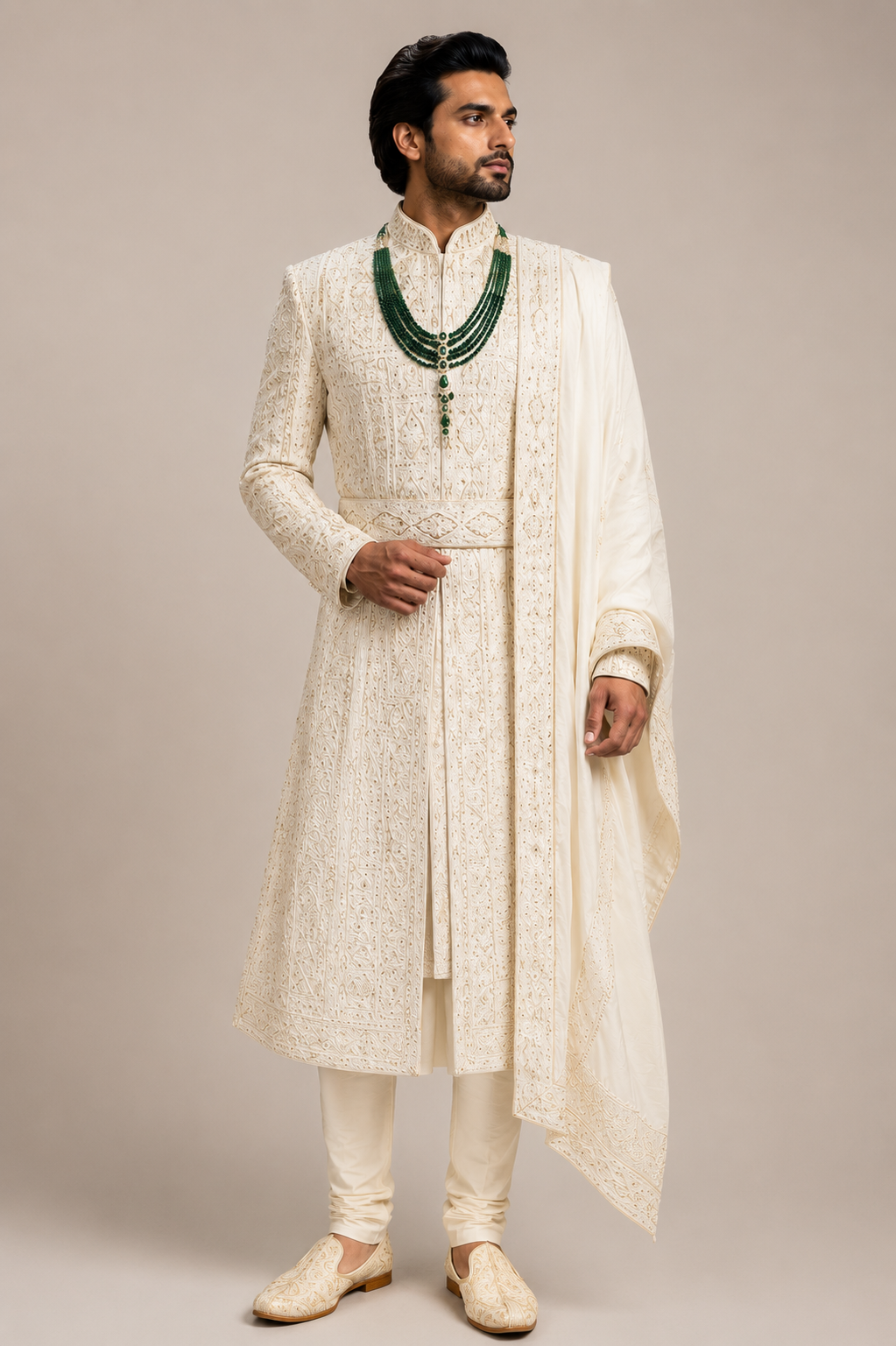
A prince coat is the usual answer, and a sherwani is also correct. Either sits lighter than the Walima — a contract ceremony, often in daylight, usually the smaller of the two rooms. Keep the palette soft and let the work be in the cloth. If your Barat is a separate event, that is where the heavily embroidered light sherwani belongs and the Nikah goes quieter still.
## What to Wear to a Walima
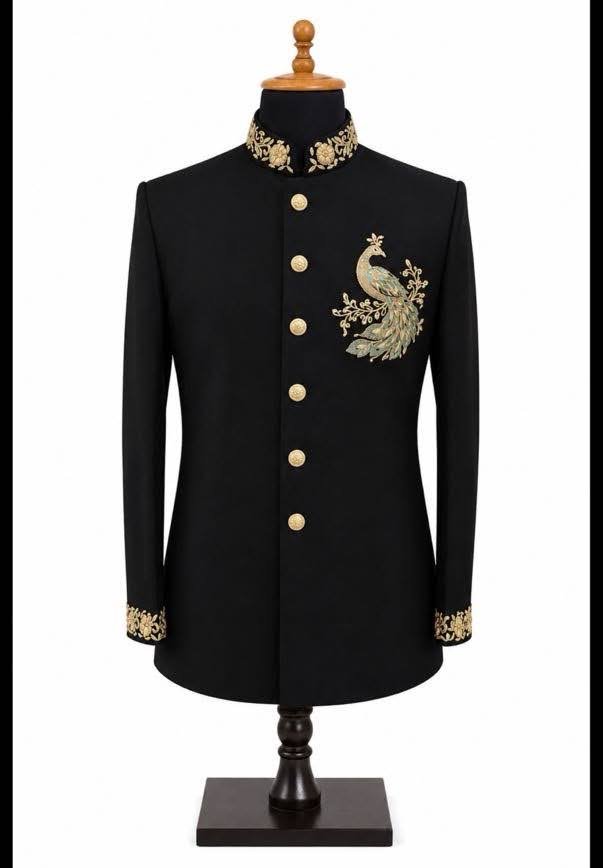
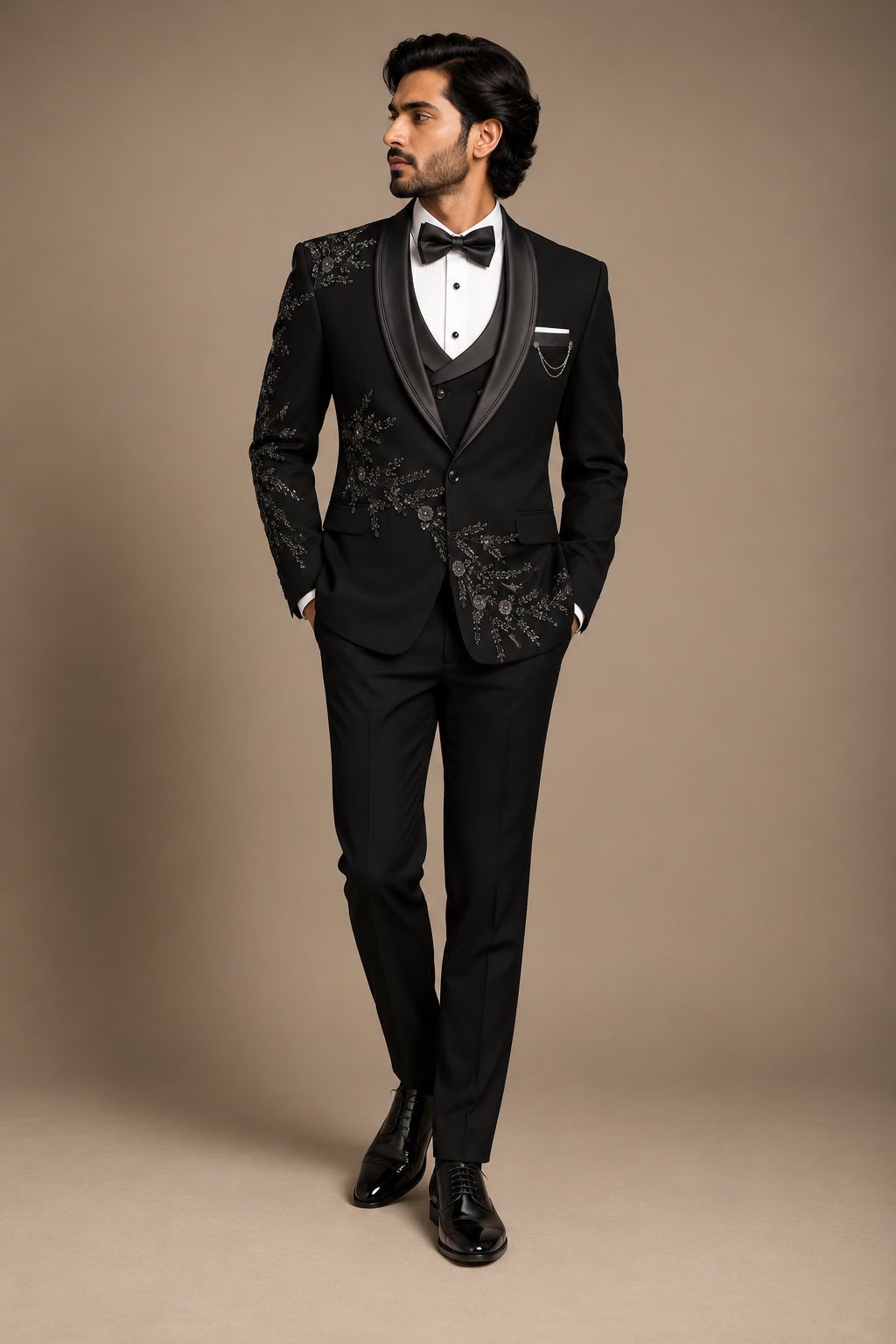
Dark, and one of three: a dark sherwani, a dark prince coat, or a dark tuxedo. Which one depends entirely on what you wore to the main event. The bar in that room is low — every other man is wearing a suit off the shelf. **A Hugo Boss or an Armani still reads as some guy in a suit.**
## Her outfit decides the shortlist
We never match the bride. We complement her. Matching is what a hire shop does with a swatch — you end up in her colour, standing next to her, reading as a set rather than two people. Complementing is a judgement about how you photograph together, and it needs her palette before yours is fixed.
Brides now wear extraordinarily heavy. **A groom in something plain next to a heavily-dressed bride doesn’t read as understated. He reads as her driver.** Colour is half of how you avoid that; the weight of the work is the other half.
## Frequently asked
**Can I wear white or ivory to my Nikah?**
Yes, and it is one of the most common choices we fit. It works best where the embroidery is tonal, so the piece has depth up close without going pale on camera.
**Can I wear black to a Walima?**
Yes. Black, midnight and charcoal all work for an evening Walima, and a black tuxedo is a legitimate answer if you wore a sherwani to the Barat.
**My family calls the Walima “the reception” — is that the same thing?**
The label is yours, the answer set is the Walima’s. A Sikh or Hindu reception is generally a tuxedo; a Walima has three real options.
**How far ahead do I need to decide?**
A bespoke piece takes eight to twelve weeks plus fittings, so the garment order settles before the colours are final.
—
*Both colour decisions come out of one conversation, not two. Bring your dates and, if you have it, what she is wearing — we map the pieces across your events first and the palette second. Consultations are free at Solihull and Mississauga, or by video.*
